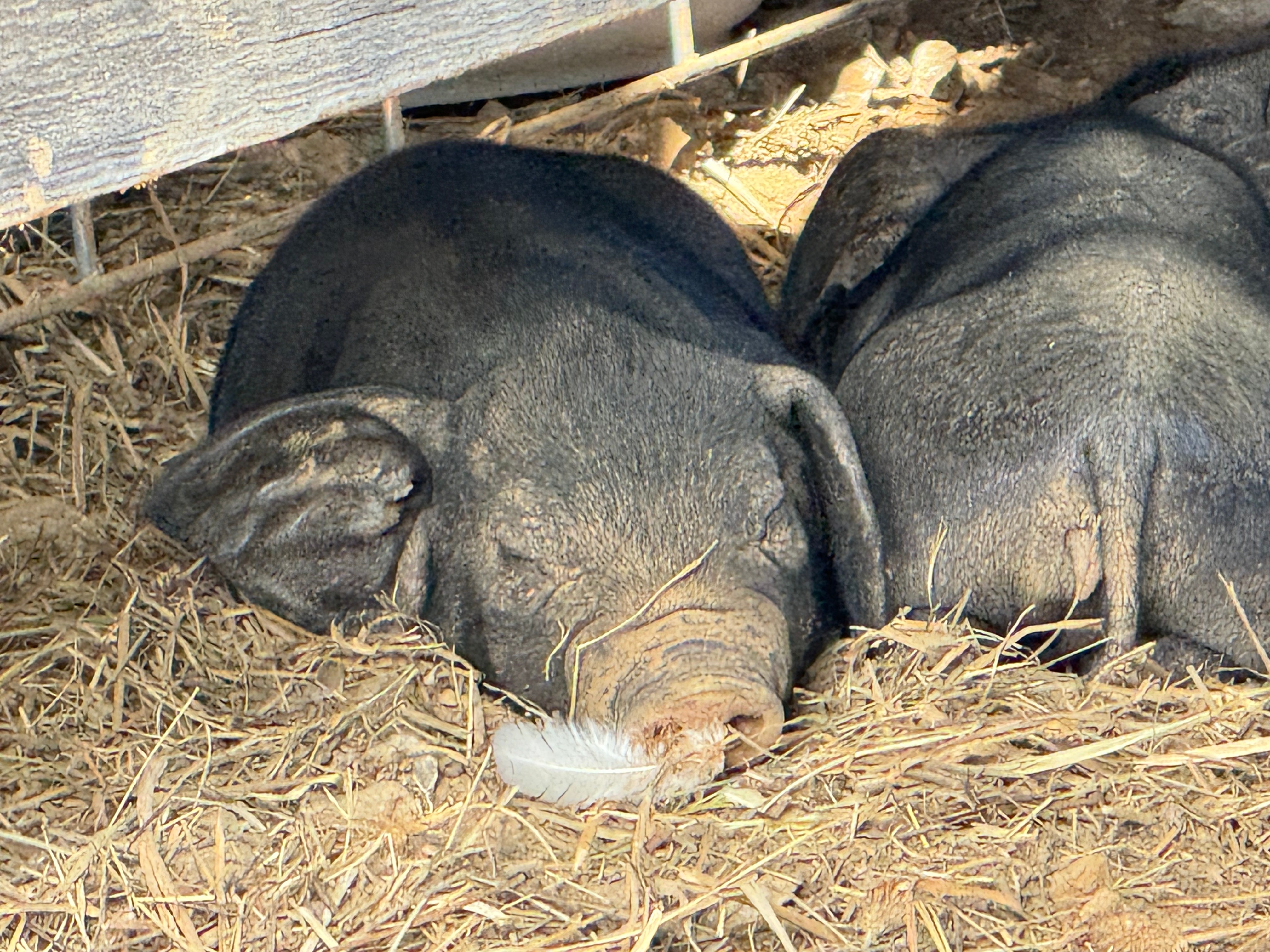
History of the Meishan
The Meishan pig, originating from the Jiangsu Province of China over a thousand years ago, holds a significant place in agricultural history. Bred by Chinese farmers for countless generations, the Meishan became renowned for its early sexual maturity, exceptional fertility—often producing litters of up to 16 or more piglets—and its remarkable ability to thrive in small-scale, resource-limited farming environments. This breed was traditionally valued not only for its adaptability and prolific reproduction, which provided vital sustenance and economic stability to rural families, but also for its important role in ceremonial and culinary traditions.
One of the most celebrated aspects of the Meishan pig is the extraordinary quality of its pork. Unlike conventional pork, Meishan pork is prized for its rich, succulent flavor and notable tenderness, stemming from a higher percentage of intramuscular fat (marbling) that delivers a melt-in-your-mouth eating experience. Meishan pork is also distinguished by its juiciness and the unique, slightly sweet flavor profile, making it highly sought after by gourmet chefs and culinary enthusiasts who appreciate distinctive tastes and textures. The meat remains moist even after cooking, an attribute rarely found in commercial pork breeds. With their distinctive wrinkled skin and gentle demeanor, Meishan pigs have become not only symbols of prosperity and good fortune in Chinese heritage, but also invaluable genetic resources for modern pig breeding programs worldwide, contributing to the development of flavorful, high-quality pork products enjoyed across cultures.
American Meishan Breeders Association (AMBA)
The American Meishan Breeders Association (AMBA) is dedicated to preserving and promoting the Meishan pig breed in the United States. AMBA supports breeders, helps maintain genetic diversity, and raises awareness about the unique heritage and qualities of Meishan pigs.
 Meishan Magic